How can I stay ahead?
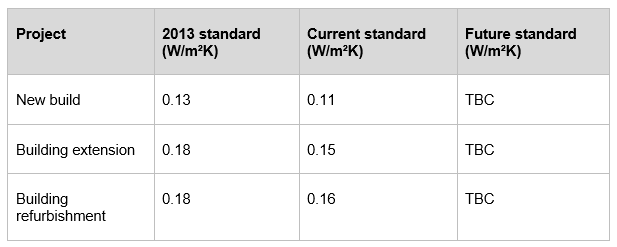
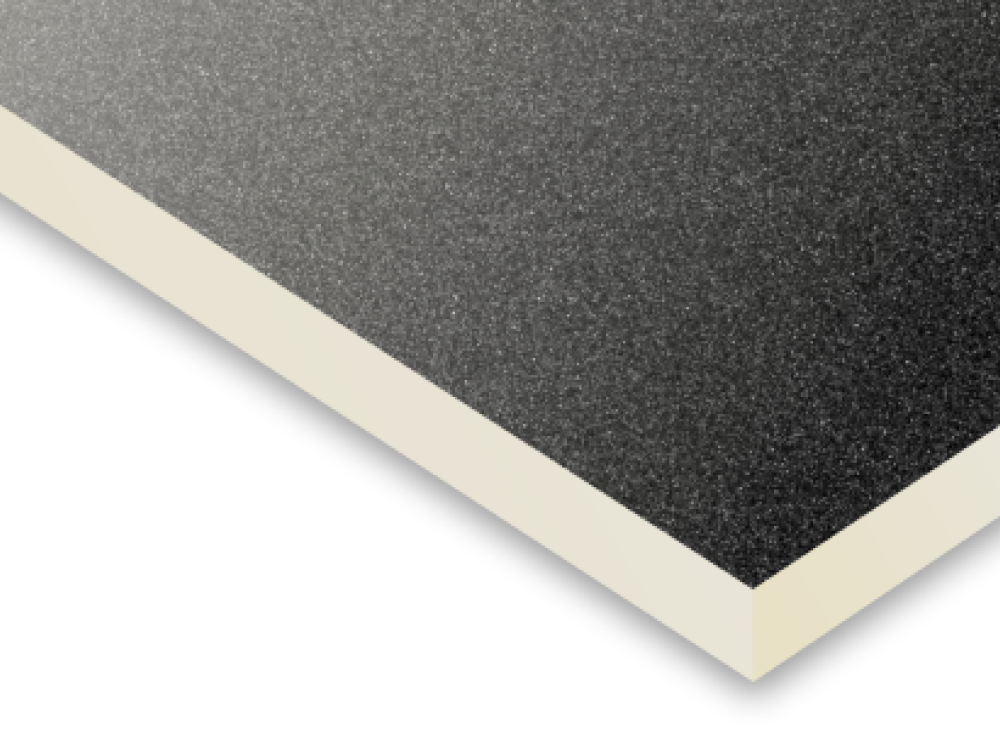
That’s why choosing the correct insulation materials now, such as Recticel's PIR boards that can be designed to exceed required U-values, can help futureproof your project and reduce the likelihood of remedial work later:
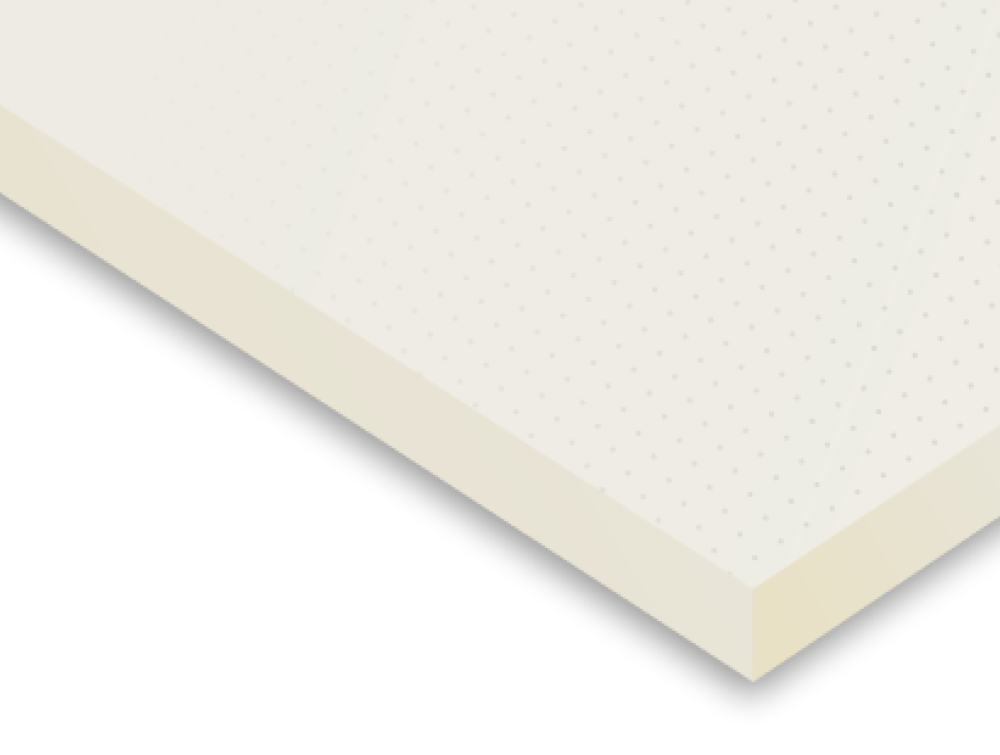
PIR insulation board for built-up felt, mastic asphalt, and bonded single ply membrane systems, offering thermal conductivity as low as 0.024 W/mK and compressive strength exceeding 150 kPa.
PIR insulation board for torch-on felt applications, offering a thermal conductivity as low as 0.024 W/mK and compressive strength exceeding 150 kPa.
PIR board for mechanically fixed single ply membrane systems, offering lambda values as low as 0.022 W/mK and compressive strength over 150 kPa.
Encapsulated Vacuum Insulated Panel (VIP) with a lambda as low as 0.008W/mK for a 60mm thick board, making it suitable for flat roofs with limited space.
Specify with sustainability in mind
Futureproofing flat roof insulation is about making more sustainable choices that support long-term performance and environmental goals. Our products are manufactured using zero ODP and low GWP blowing agents, and have an ‘A’ rating in the BRE Green Guide, helping support BREEAM targets.
To reduce waste on site, our Gradient design team also offers project-specific layout schemes that account for penetrations, falls, and detailing, helping to minimise offcuts and improve efficiency from the outset.
For more on sustainability and flat roof insulation, check out our recent blog where we cover five steps to improve sustainability, reduce waste, and maximise performance.
What are the recommended insulation materials for a flat roof?
For both new builds and refurbishments, warm flat roof systems are widely recognised as the most effective construction method. By placing the insulation above the structural deck and beneath the waterproof membrane, they keep the deck warm and dry, reducing condensation risk and mitigating thermal bridging, which is crucial for building envelope continuity and airtightness.
PIR insulation boards
When it comes to insulation materials, PIR insulation boards, such as those manufactured by Recticel, are among the most effective solutions for warm flat roofs. With lambda values as low as 0.022 W/mK for Recticel’s Eurothane® Eurodeck, PIR boards help you achieve low U-values with relatively slim build-ups.
This makes PIR insulation boards suitable for space-constrained applications such as:
- Low-rise developments
- Roof terraces
- Refurbishments where structural height is limited
- Projects aiming to exceed regulatory minimums and futureproof for the Future Homes Standard
Suitable for both residential and commercial projects, Recticel’s PIR boards help you meet performance standards without compromising on design flexibility. You can learn more about our full range of boards here.
What is the minimum thickness of insulation for a flat roof?
Achieving a target U-value depends on the thermal conductivity of the insulation and the overall build-up. As a general guide, to meet a U-value of 0.16 W/m²K, standard PIR boards may require around 120 - 140mm of thickness.
That’s why early coordination with manufacturers and experts, including Recticel’s Technical Services team, can help you fine-tune insulation thickness, select the right PIR board, and reduce overall build-up height without compromising performance.
Get it correcticel – the first time
Designing for compliance means delivering buildings that perform as promised, today and long into the future. With heating costs rising and regulations tightening, investing in the right insulation ensures:
- Long-term compliance with emerging regulations
- Increased energy savings and lower energy usage
- More consistent internal temperature comfort for end user
- Fewer on-site challenges and changes
How Recticel supports your specification
At Recticel, we go beyond supplying insulation. We help you specify with confidence.
Our Technical Services team can support you with:
- Detailed U-value calculations
- Build-up advice for flat roofs
- Support with regulatory compliance, including Part L
- Advice on vapour control layers, moisture management, and condensation risk
Early collaboration ensures you hit both current regulations and stay ahead of Future Homes Standard requirements, saving time, cost, and performance headaches later.
Need support with U-value targets or flat roof specifications?
Whether you're working on a new housing development, refurbishing a school roof, or upgrading a commercial flat roof system, we’re here to help you do things the correcticel way.
Utilise our U-Value calculator, Contact our Technical Services team today or request your free Part L guide to stay one step ahead